
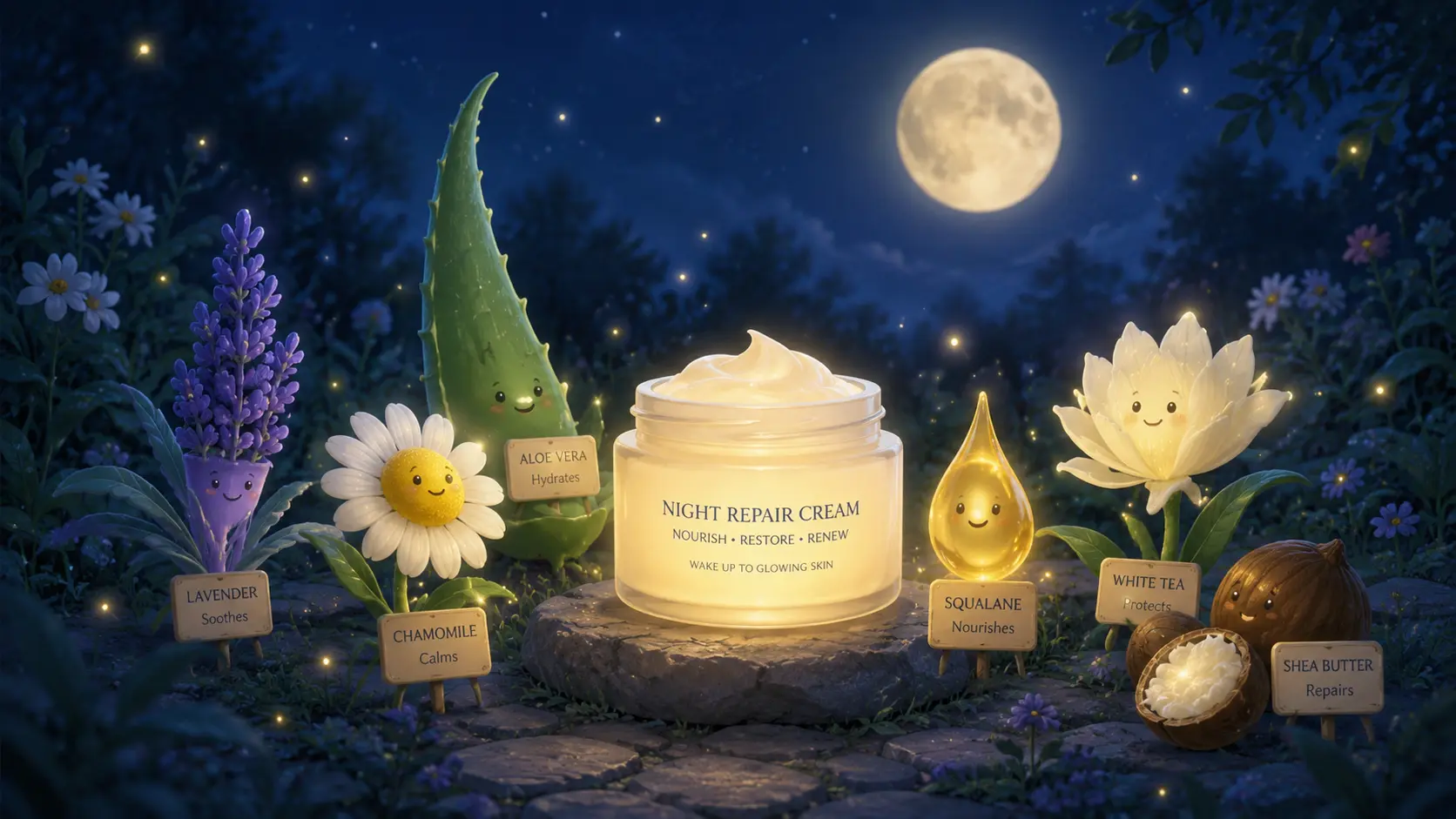
Recent dermatology guidance and skincare research continue to highlight ceramides, hyaluronic acid, niacinamide, peptides, retinoids, squalane, glycerin, and antioxidants as some of the most valuable ingredients in night creams for hydration, barrier repair, and overnight skin recovery. Experts also emphasize that nighttime is when skin regeneration activity increases, making repair-focused ingredients particularly useful in an evening skincare routine.
Below is the article.
Why Nighttime Is Critical for Skin Recovery
The skin works around the clock, but its priorities change throughout the day. During daylight hours, it focuses on defending itself against environmental stressors such as UV exposure, pollution, temperature fluctuations, and free radicals. At night, those defensive demands decrease, allowing the skin to redirect energy toward repair and renewal.Studies cited by skincare experts indicate that overnight periods are associated with increased regenerative activity and enhanced repair processes. Blood flow to the skin can increase, and the skin becomes more receptive to beneficial ingredients. This creates an opportunity for active ingredients to support moisture retention, barrier restoration, and visible improvements in skin texture.This is why night creams are usually richer and more nourishing than daytime moisturizers. Rather than focusing on sun protection or lightweight wear, they prioritize long-lasting hydration and recovery. Think of your skin as a construction site. During the day, workers are busy preventing damage. At night, they finally get the chance to repair and rebuild.
What Skin Needs Most During Overnight Recovery
Successful overnight skincare revolves around three major needs: hydration, barrier repair, and renewal. These needs are interconnected, and neglecting one often affects the others. Skin that lacks moisture may become more vulnerable to irritation. A compromised barrier can lead to dehydration. Poor renewal can contribute to dullness and rough texture.Hydration remains the foundation of healthy skin. Water helps maintain plumpness, softness, and elasticity. Without adequate hydration, skin can appear tired, rough, and less resilient. This is why effective night creams often contain humectants that attract moisture and emollients that help keep it in place.Barrier repair is equally important. The skin barrier functions like a brick wall, preventing moisture loss while protecting against external irritants. Ingredients that reinforce this barrier can improve overall skin health and comfort. Finally, renewal-focused ingredients support smoother-looking skin and help address visible signs of aging, uneven texture, and dullness. The best night creams address all three areas simultaneously.
Moisture-Retaining Ingredients That Support Hydration
Hydration-focused ingredients are often the stars of an effective night cream. Among the most recognized is hyaluronic acid, a powerful humectant capable of attracting and retaining water. Dermatologists consistently recommend it because it helps skin appear plumper and more hydrated. Many modern night creams combine hyaluronic acid with additional moisture-supporting ingredients to maximize benefits.Glycerin is another hydration powerhouse. While it may not receive the same attention as trendier ingredients, it remains one of the most effective and well-established humectants available. It attracts water to the skin and supports long-lasting hydration. Many dermatologists consider glycerin one of the most reliable ingredients for maintaining moisture balance.Squalane deserves attention as well. This lightweight emollient helps prevent moisture loss without feeling heavy or greasy. It is especially valuable for dry and sensitive skin types because it mimics some of the skin’s natural lipids. Combined with humectants like hyaluronic acid and glycerin, squalane helps create a comprehensive hydration system that works throughout the night.
| Ingredient | Primary Function | Best For |
|---|---|---|
| Hyaluronic Acid | Attracts water | Dehydrated skin |
| Glycerin | Retains moisture | All skin types |
| Squalane | Prevents moisture loss | Dry and sensitive skin |
| Urea | Hydrates and softens | Rough, dry skin |
Skin-Conditioning Components That Strengthen the Barrier
A strong skin barrier is essential for maintaining hydration and reducing sensitivity. Among all barrier-supporting ingredients, ceramides stand out as one of the most important. Ceramides are naturally present in the skin and help seal gaps between skin cells. As ceramide levels decline with age and environmental stress, the skin can become drier and more vulnerable. Products containing ceramides help replenish these essential lipids and strengthen the barrier.Niacinamide, a form of vitamin B3, is another highly respected ingredient. It supports barrier function, helps reduce moisture loss, and can improve skin texture. Many dermatologists recommend niacinamide because it offers benefits for a wide range of skin concerns, including redness, uneven texture, and excess oil production.Cholesterol and fatty acids often accompany ceramides in advanced barrier-repair formulas. Together, these ingredients help recreate the skin’s natural lipid structure. Think of ceramides, cholesterol, and fatty acids as the bricks, mortar, and reinforcement beams of your skin’s protective wall. When used together, they create a stronger and more resilient barrier capable of retaining moisture more effectively.
Ingredients Linked to Smoother-Looking Skin
Many people choose a night cream because they want smoother, firmer, and younger-looking skin. One of the most researched ingredients in this category is retinol. Retinol belongs to the retinoid family and is widely recognized for supporting skin renewal and improving the appearance of fine lines and uneven texture. Nighttime is often the preferred time to use retinol because it can increase sensitivity to sunlight.Peptides have also become increasingly popular. These amino-acid-based compounds act as messengers that support the skin’s natural repair processes. While peptides are generally gentler than retinoids, they can complement other anti-aging ingredients and contribute to firmer-looking skin over time.Some night creams also include gentle exfoliating acids such as glycolic acid or lactic acid. These ingredients help remove dull surface cells and promote a smoother appearance. The key is balance. Excessive exfoliation can compromise the barrier, so effective formulations typically combine exfoliating ingredients with hydrating and soothing components to minimize irritation.
Antioxidants That Work While You Sleep
Antioxidants are often overlooked in night creams, yet they play a valuable role in supporting skin health. During the day, environmental stressors generate free radicals that can contribute to visible aging. Antioxidants help neutralize these unstable molecules and support recovery.Vitamin E remains one of the most widely used antioxidants in skincare. It helps protect against oxidative stress while supporting moisture retention. Many night creams include vitamin E because it works well alongside other moisturizing and repair-focused ingredients.Green tea extract provides antioxidant benefits while also helping calm the skin. It is commonly included in formulas designed for sensitive or redness-prone skin. Its soothing properties make it an excellent complement to stronger active ingredients.Vitamin C derivatives are also appearing in more nighttime formulations. Although vitamin C is often associated with morning routines, stable derivatives can support brightness and antioxidant protection overnight. Combined with other repair-focused ingredients, antioxidants help create a more comprehensive recovery environment while you sleep.
Matching Ingredients to Different Skin Concerns
No single ingredient combination works perfectly for everyone. Dry skin often benefits from formulas rich in ceramides, hyaluronic acid, glycerin, squalane, and fatty acids. These ingredients work together to replenish moisture and reinforce the barrier.For oily or acne-prone skin, lightweight formulations featuring niacinamide, hyaluronic acid, and carefully balanced moisturizers can provide hydration without overwhelming the skin. Some individuals also benefit from retinoids that support cell turnover and help reduce congestion. Dermatologists frequently recommend non-comedogenic nighttime moisturizers for this skin type.Sensitive skin generally responds best to fragrance-free products containing ceramides, niacinamide, panthenol, and soothing botanical extracts. Aggressive exfoliants and excessive layering of active ingredients may increase irritation. Experts increasingly advise simpler routines built around hydration and barrier support.Mature skin often benefits from a combination of hydration, barrier repair, and renewal-focused ingredients. Retinol, peptides, ceramides, niacinamide, and antioxidants can work together to address multiple concerns simultaneously, including dryness, texture, and visible signs of aging.
Ingredient Combinations That Deliver Better Results Together
The most effective night creams rarely rely on a single hero ingredient. Instead, they combine complementary ingredients that enhance each other’s benefits. One of the strongest combinations is ceramides plus hyaluronic acid. Hyaluronic acid attracts moisture, while ceramides help keep it locked in. Together, they create a powerful hydration-and-barrier-repair partnership.Another excellent pairing is retinol and niacinamide. Retinol supports renewal, while niacinamide helps calm and strengthen the barrier. This combination can make retinol-based routines more comfortable and sustainable over the long term. Dermatologists frequently recommend niacinamide alongside retinoids for this reason.A third high-performing combination is peptides and antioxidants. Peptides support the skin’s repair processes, while antioxidants help combat oxidative stress. Together, they create an environment that supports healthier-looking skin over time. Rather than searching for one magical ingredient, consumers often achieve better results by choosing formulas that thoughtfully combine several proven ingredients.
Conclusion
Finding the right night cream is less about chasing trends and more about understanding what your skin genuinely needs. The most effective formulas focus on hydration, barrier repair, and overnight recovery. Ingredients such as ceramides, hyaluronic acid, glycerin, niacinamide, squalane, retinol, peptides, and antioxidants consistently appear in dermatologist-recommended products because they address these core needs.A well-formulated night cream works like an overnight support system for your skin. While you sleep, these ingredients help replenish moisture, strengthen the barrier, support renewal, and improve overall skin comfort. Choosing products based on ingredient quality rather than marketing claims can make a noticeable difference in your skincare results.When evaluating a night cream, start by identifying your primary skin concern and then look for ingredient combinations that directly address it. The right formula can help you wake up to skin that feels more hydrated, smoother, calmer, and healthier day after day.
FAQs
1. What is the most important ingredient in a night cream?
There is no single best ingredient for everyone, but ceramides, hyaluronic acid, and niacinamide are among the most universally beneficial because they support hydration and barrier health.
2. Is retinol necessary in a night cream?
Not necessarily. Retinol can be highly effective for smoothing texture and addressing visible aging concerns, but some people achieve excellent results with peptides and barrier-repair ingredients alone.
3. Can oily skin benefit from night creams?
Yes. Oily skin still needs hydration. Lightweight, non-comedogenic night creams containing niacinamide and hyaluronic acid can help maintain balance without clogging pores.
4. Should sensitive skin avoid active ingredients?
Sensitive skin does not need to avoid all actives, but it should prioritize barrier-supportive ingredients and introduce stronger actives gradually.
5. Which ingredients work best together in a night cream?
Ceramides with hyaluronic acid, retinol with niacinamide, and peptides with antioxidants are among the most effective ingredient combinations for overnight skin support.

Nico is a 38-year-old American content writer living in Albuquerque, New Mexico. Drawing on years of experience covering beauty products, skincare innovations, and consumer trends, he produces detailed educational articles designed to help readers make informed choices. His work for beautyproducts.online reflects a commitment to trustworthy research, balanced opinions, and helpful long-form content supported by credible sources whenever possible.